
What Happens to Your Kidneys When You Take Too Many Supplements
Supplements can help close real nutrient gaps — but taking more than your body needs can quietly put extra strain on the organs responsible for filtering everything you consume.
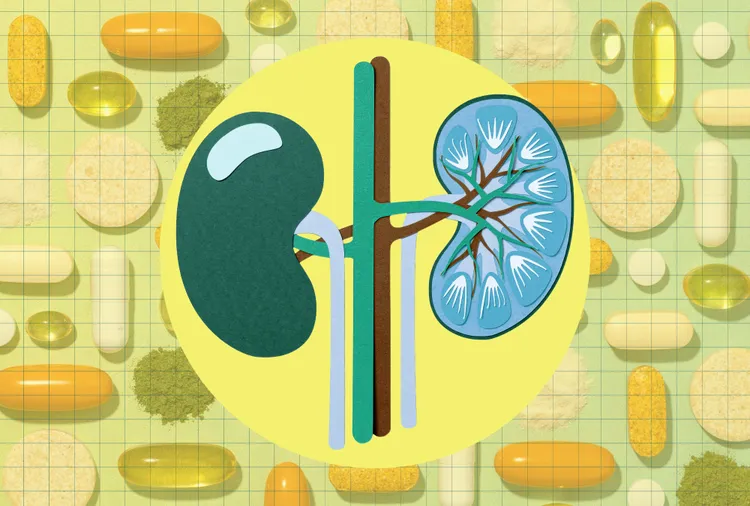
The kidneys handle far more than waste removal. Physician Nneoma Oparaji describes them as working like a filter, a chemist, and a thermostat all at once, constantly adjusting the blood to keep the body's internal chemistry steady. Beyond filtering out waste, they also manage the body's fluid levels and electrolyte balance.
People reach for supplements for all kinds of reasons: closing a nutritional gap, supporting a specific health goal, or correcting a diagnosed deficiency. But loading up on supplements isn't automatically safe. Because the kidneys are responsible for filtering and regulating so much of what enters the bloodstream, taking more than necessary can end up working against them. Here's what excessive supplement use can do to kidney health, and some practical ways to take supplements without putting your kidneys at unnecessary risk.
"Natural" doesn't automatically mean "kidney-safe" — supplement-related kidney injury is an increasingly recognized problem worldwide.
— Jessica Clancy-Strawn, M.A., RDN
A Higher Risk of Kidney Injury
It's often the herbal or "natural" supplements that carry the biggest risk to kidney tissue. Ingredients like aloe vera, licorice root, and cat's claw can damage kidney cells directly, restrict blood flow to the kidneys, encourage crystal formation, or interact poorly with medications in ways that add extra strain. Over time, these effects can contribute to acute kidney injury, chronic kidney disease, and lasting scarring of kidney tissue.
A Higher Chance of Kidney Stones
Calcium and vitamin D are two widely used supplements linked to kidney stone formation. Vitamin D boosts how much calcium the intestines absorb, which in turn can raise the amount of calcium passed into the urine — a particular concern for people already prone to high urinary calcium. When urine holds too much calcium alongside other stone-forming compounds like oxalate or phosphate, crystals can form and eventually grow into stones.
Calcium carbonate antacids, commonly used for reflux or indigestion, are another factor worth watching. Taking them often or in high doses adds a large amount of elemental calcium that the kidneys then have to clear through urine. Combining high-dose vitamin D with calcium carbonate can compound the effect, pushing urinary calcium even higher and further raising stone risk.
A Disrupted Mineral Balance
The kidneys are constantly fine-tuning how much calcium, phosphate, potassium, and magnesium leave the body through urine, keeping blood levels of these minerals within a healthy range. Heavy supplement use can throw that balance off. Very high vitamin D intake, for instance, can push blood and urine calcium levels up, which may lead to calcium building up in kidney tissue and causing damage over time. People with already-reduced kidney function face extra risk here, since their kidneys have a harder time clearing excess minerals in the first place, which can let certain nutrients build up to unsafe levels.
More isn't always better with supplements — extra amounts can simply go to waste, or raise the risk of toxicity.
— Nneoma Oparaji, M.D., DipABLM, DABOM
Taking Supplements with Your Kidneys in Mind
- Watch for overlap: If you take several supplements, check labels closely for repeated ingredients across products, so you don't end up over-consuming one nutrient without realizing it.
- Loop in a dietitian: A registered dietitian can cross-check your supplements against any medications you take and help you figure out what you actually need and for how long.
- Skip the "more is better" mindset: Higher doses don't necessarily mean better results — they can just as easily add risk with no added benefit.
- Stick to reputable brands: Because supplement quality isn't regulated the way medications are, look for products independently tested by organizations like USP or NSF, which verify that a product contains what its label claims and is free of contaminants.
The Bottom Line
Supplements have a real place in filling nutrient gaps or supporting specific health needs, but piling on high doses or stacking multiple products can raise the risk of kidney harm — from stones to longer-term kidney disease. Before adding new supplements to your routine, check labels for overlapping ingredients, favor independently tested products, and consider working with a qualified health care provider who can help you use supplements in a way that protects rather than strains your kidneys.