
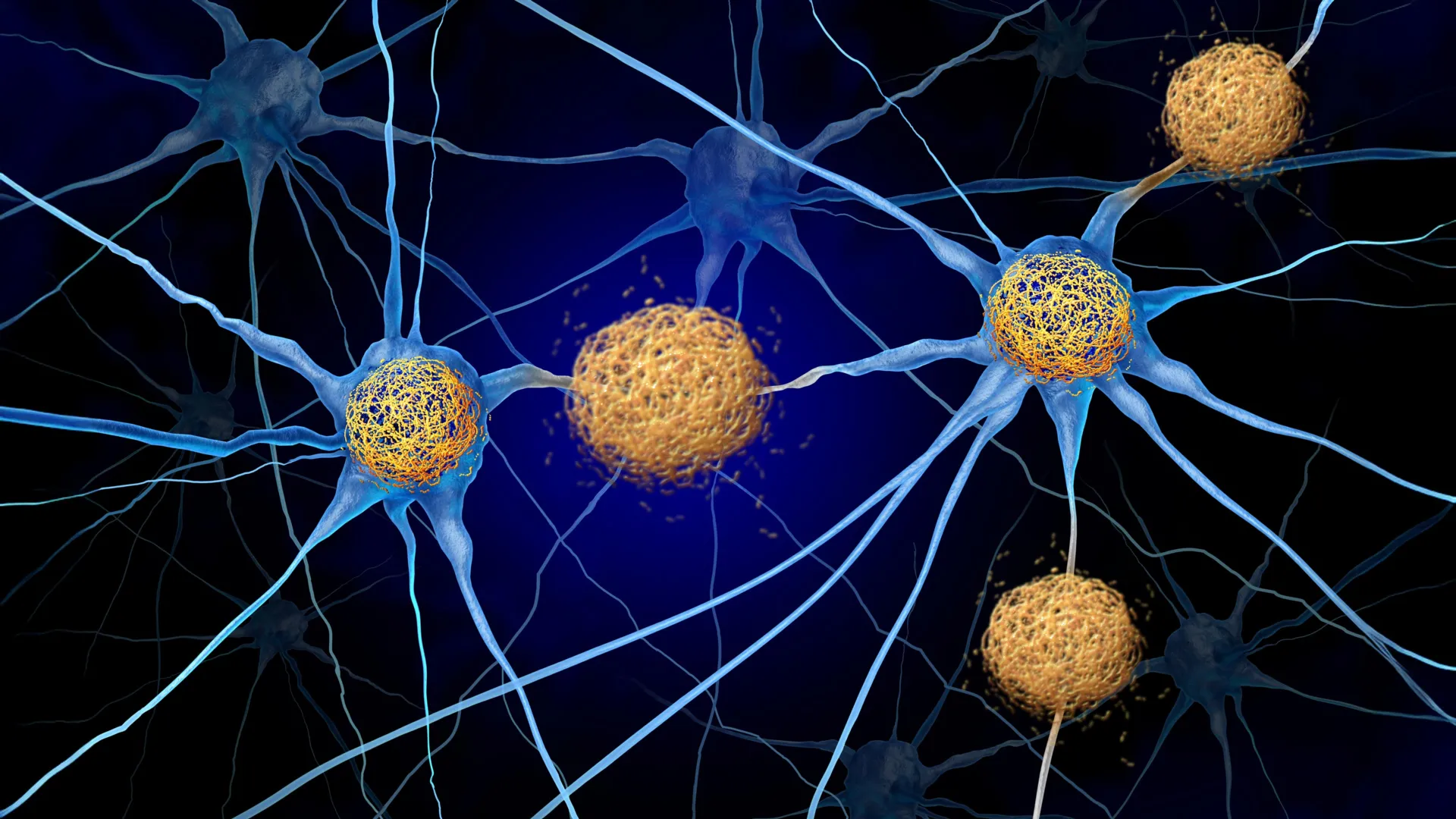
Alzheimer's disease remains one of the most challenging conditions in brain health. Although researchers have made progress in understanding its underlying biology, many questions remain about why the disease develops and how its progression can be slowed.
For decades, a substantial amount of research has focused on amyloid beta, a protein fragment associated with abnormal deposits in the brain. However, scientists are increasingly investigating whether other molecules might also deserve attention.
One of these molecules is called P3. Researchers at the University of California, Santa Cruz, have examined its ability to form protein aggregates, challenging the assumption that this fragment is biologically unimportant.
The findings offer another direction for Alzheimer's research. They do not, however, establish that P3 causes the disease or that targeting it would prevent dementia.
Why Amyloid Beta Has Dominated Alzheimer's Research
One characteristic associated with Alzheimer's disease is the accumulation of abnormal protein deposits in the brain. Amyloid beta has become a major subject of scientific investigation because certain forms of this peptide can gather into clusters and plaques.
Amyloid beta is produced when a larger protein called amyloid precursor protein, or APP, is broken down by enzymes. The process can generate peptide fragments with different properties.
Two particularly well-studied forms are Aβ40 and Aβ42. Aβ42 is more prone to sticking together, making it an important focus of studies examining the formation of amyloid deposits.
This research has also influenced the development of treatments. Some newer antibody medicines target amyloid beta and have demonstrated modest slowing of cognitive and functional decline in certain patients with early Alzheimer's disease. They also carry important risks and are not suitable for everyone.
These developments have not resolved every question about the disease. Scientists continue to investigate additional molecules and biological mechanisms that could help explain why brain cells become damaged.
What Is the P3 Peptide?
P3 is a small protein fragment generated during the processing of amyloid precursor protein. It is produced through a pathway involving alpha-secretase and gamma-secretase, rather than the pathway that generates amyloid beta.
Because P3 was traditionally considered less likely to contribute to harmful protein deposits, it received less attention than amyloid beta in Alzheimer's research.
Biochemist Jevgenij Raskatov and colleagues at the University of California, Santa Cruz, have investigated this assumption. Their work suggests that P3 can aggregate and form fibrils under laboratory conditions.
Fibrils are thin, threadlike structures formed when molecules assemble into organized arrangements. In certain diseases, protein aggregation can be associated with biological dysfunction, although the effects depend on the specific molecule and context.
In the experiments discussed by the researchers, P3 displayed a notable capacity to form these structures. This challenges the simple view that the peptide is incapable of aggregation.
Could P3 Affect Brain Cells?
The ability to form aggregates is only one aspect of the research. Another question is whether P3 can affect neurons, the cells responsible for transmitting information throughout the brain.
Findings reported by the research team suggest that P3 may have harmful effects on neurons in experimental settings, although the reported effects appear weaker than those associated with amyloid beta.
Researchers are also interested in possible interactions between P3 and amyloid beta. If the peptides influence one another's aggregation or biological effects, studying them together could reveal details that investigations of either molecule alone might miss.
The important question is not simply whether a peptide can form aggregates, but whether those aggregates matter in the living human brain.
This distinction is essential. Experiments conducted in a laboratory cannot, by themselves, show that a molecule causes Alzheimer's disease in people. Researchers must establish whether the same processes occur in the human brain and whether they contribute meaningfully to disease progression.
Why This Finding Matters for Future Research
Alzheimer's is a complex neurological condition. Examining several biological processes may help researchers build a more complete understanding of how it develops.
The renewed interest in P3 also highlights a broader principle of scientific investigation: widely accepted assumptions should remain open to testing when new evidence becomes available.
If future studies establish that P3 contributes to disease-related processes, the peptide could become a useful additional target for investigation. It might also help researchers understand how different protein fragments interact.
For now, the results are best viewed as a research lead rather than a breakthrough treatment. More work is required to determine how the findings translate from laboratory experiments to human disease.
What Scientists Still Need to Find Out
Several important questions remain unanswered. Addressing them will help determine whether P3 is relevant to Alzheimer's disease beyond laboratory experiments.
- Does P3 accumulate in human brains? Researchers need to establish whether it builds up in people with Alzheimer's disease and how its levels compare with those in people without it.
- How does it interact with amyloid beta? Further studies could clarify whether the peptides influence one another's aggregation or effects.
- Does it contribute to disease progression? Scientists must determine whether P3 is directly involved in neuronal damage or is simply associated with other processes.
- Could it become a treatment target? Any future therapy would need careful testing for safety and meaningful benefits in clinical trials.
The Bottom Line
The study of P3 offers researchers another avenue to explore in their efforts to understand Alzheimer's disease. A peptide once considered relatively harmless may have properties that warrant closer scientific examination.
However, there is still a substantial gap between demonstrating aggregation in laboratory experiments and proving that a molecule contributes to Alzheimer's disease in humans.
Further research will help determine whether P3 plays a meaningful role in the condition and whether studying it could lead to new approaches to treatment. Until then, amyloid beta and other established areas of Alzheimer's research remain important parts of the scientific picture.